

Tennis Lights and Neighbors: How to Stop Glare and Spill

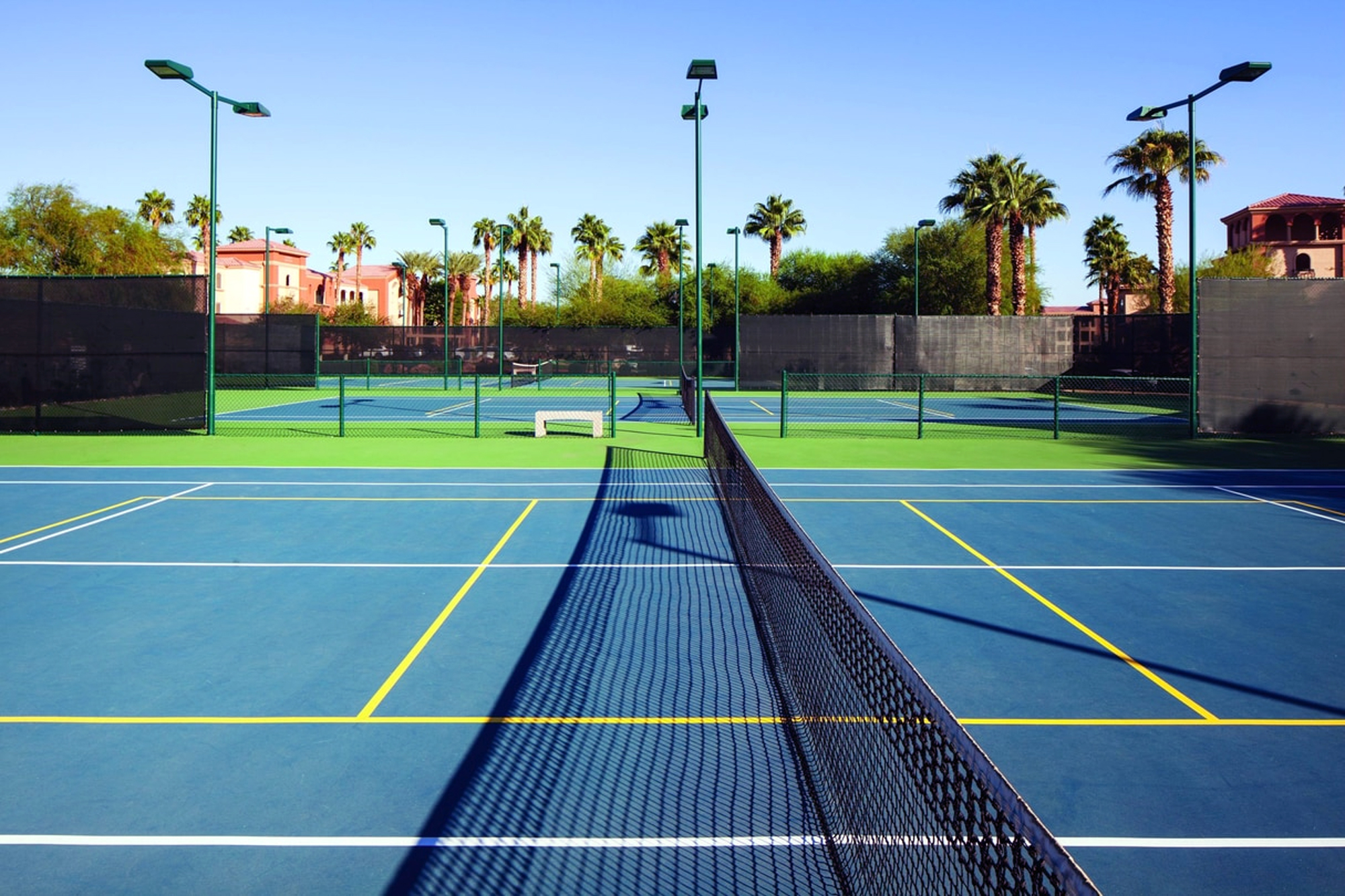
Few things sour an HOA board meeting faster than a neighbor complaining that the tennis lights shine into their bedroom. Court lighting complaints are common, and most of them can be prevented, or fixed, with the right design. This guide explains what causes the problem and what to look for in a solution.
Glare and spill are two different problems
Neighbors usually describe both as “the lights are too bright,” but they have different causes:
- Spill light is light that lands where it is not wanted, such as a neighbor’s yard, wall or window.
- Glare is the harsh brightness you see when you look toward a fixture, even from far away. A fixture can create glare for a neighbor across the street without putting measurable light on their property.
- Sky glow is light aimed or reflected upward. It washes out the night sky and is what dark sky advocates focus on.
A good design addresses all three.
Why older court lighting causes complaints
Many older courts use wide floodlights aimed up and out to cover the court from a few poles. That approach throws light well past the fence. The tennis court construction manual published by the USTA and the American Sports Builders Association notes that high mast floodlights often cause considerable spill and blinding glare, both for neighbors and for players looking up for a lob or serve.
Other common causes:
- Fixtures tilted up after storms or years of maintenance.
- Missing or damaged shields.
- Lights left on long after play ends.
- More light than the play requires, which simply means more light escaping.
What good design looks like
Modern LED sports fixtures make it far easier to keep light on the court. Look for these features in a design:
- Sharp cutoff optics, which aim light onto the playing area and cut it off beyond it.
- No light above horizontal. Fixtures mounted flat, with no uplight.
- Shields or louvers on the back side of fixtures that face homes.
- The right pole height and placement, so fixtures can aim down at the court instead of across the neighborhood.
- A photometric plan that shows spill at the property line, not just light on the court.
Many municipalities limit how much light can cross a property line, in some cases to as little as 1 foot-candle, so the plan should prove compliance before anything is installed.
Controls: the easiest win
The simplest way to reduce complaints is to make sure the lights are off when nobody is playing. Instant-on LED fixtures make this practical:
- Timers and curfews that shut lights off at a set time every night.
- Keypads or app access so lights run only when a court is booked or in use.
- Dimming for practice or maintenance, when full brightness is not needed.
For reference, the DarkSky Approved Outdoor Sports Lighting program, one of the strictest standards in use, requires automatic shut-off at the local curfew and no later than 11 p.m., dimming between 25 and 100 percent, zero uplight for sports like tennis, and a maximum color temperature of 5,700 K. Most properties do not need certification, but these criteria are a useful benchmark for a neighbor-friendly design.
What this means for your property
- Name the problem. Is it spill into yards, glare from across the street, or lights left on late? Each has a different fix.
- Ask for a spill plan. Your design should show light levels at the property line.
- Choose flat-mounted, sharp cutoff fixtures with back shields where homes are close.
- Add a curfew timer. It is low cost and often solves the complaint by itself.
- Check local rules before you design, so the plan meets them from the start.
Keep the light on the court
Start with a free 20-minute project review, with no cost and no obligation. Our team will design your court lighting in AGi32 Lighting Software and show you the light on the court and at the property line before anyone buys a fixture. One point of contact from first call to final walkthrough, and we reply within one business day.
Schedule a Free 20-Minute Project Review
More about our tennis court lighting specialty.
Sources
- Tennis Courts: A Construction and Maintenance Manual, United States Tennis Association and American Sports Builders Association.
- DarkSky Approved Outdoor Sports Lighting Program, version 1.3, DarkSky International.